By Dr Ghana Gurung, Dr Tshering Lama O’Gorman and Dermot O’Gorman
When the sirens sounded ahead of Nepal’s recent glacial collapse flood (Rasuwa-Bhotekoshi), not everyone ran. Some people moved to higher ground straight away while others stayed where they were. They had heard the warning, but they just could not imagine a flood of that size. Nothing in their lives had prepared them for it.
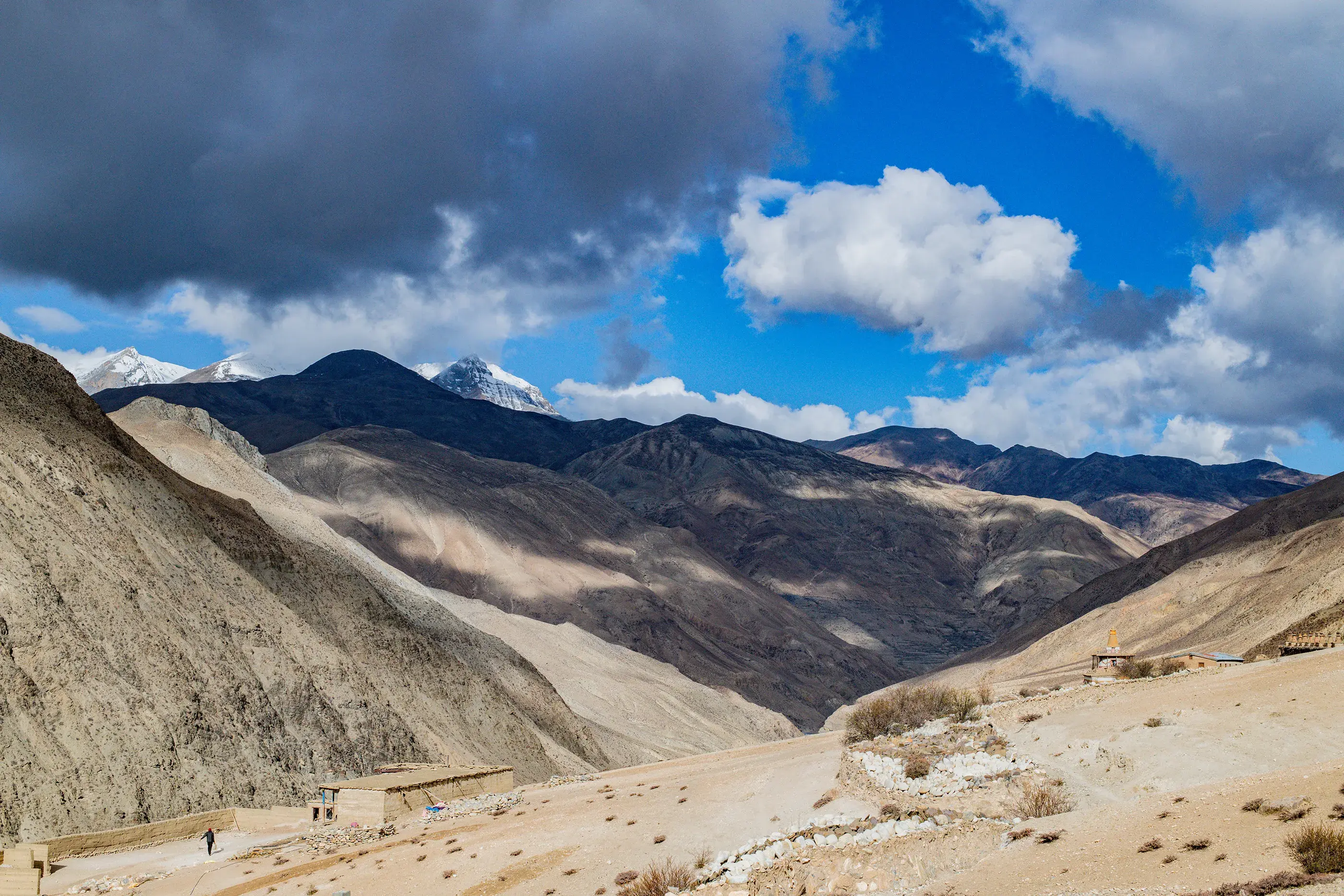
This hesitation is a very human trait we can all understand. Most of us read risk through experience. We expect tomorrow to look much like yesterday, and we find it hard to prepare for something that is a scale that we have never seen. That may be the most important lesson the Nepal tragedy is offering the rest of us. This was not only a Himalayan disaster but it was a preview of the climate the world is heading towards.
For decades, scientists have warned us that every fraction of a degree matters. Beyond 1.5°C, the risks of glacial instability, extreme rainfall and flooding increase sharply, with cascading consequences for communities. For many people, those warnings have stayed abstract, confined to reports and negotiating texts. The real time footage from Nepal changes that. Like the people living in those valleys, we were shocked by what we saw. This was not a river rising, it was a wall of water, rock, debris and ice. Roads, bridges and homes disappeared in moments, along with livelihoods and infrastructure that took generations to build.
The devastating images show today’s reality, not a distant future. They come from the world we are already living in. Nepal also reveals the limits of warnings: an early warning system works only when people understand the alarm and the consequences of ignoring it. A siren on its own is not enough. The same is true of climate action. Scientists have been sounding the alarm for years. As attention shifts from immediate disaster response to recovery, Dr Ghana Shyam Gurung raises a harder question - how do we rebuild better, safer and greener to ensure healthy ecosystems for disaster risk reduction, resilient livelihoods and economic development. Now we must not just rebuild, simply putting things back the way they were. It’s time to think and build our settlements and infrastructure differently.
In August 2024, glacial lakes burst above Thame in the Everest region. In May 2025, two small glacial lakes gave way above Tilgau in Humla. In July 2025, a flash flood on this same Bhotekoshi corridor swept away the Friendship Bridge at Rasuwagadhi. Barely a year later, ice and rock broke away from Langtang Lirung. Events once described as once-in-a-generation are now arriving almost every season, and each one strikes communities that have not yet recovered from the last.
Behind the footage are numbers that are hard to hold. At least 1,453 people have been confirmed dead in Nepal and 5,285 remain missing, according to NDRRMA situation report September 26, 2026. Some perished in hydropower tunnels that are filled with mud. Many will never be found, and their families will grieve without a body to cremate and final rites to perform. Yet the deepest losses do not appear damage assessments. Villages such as Timure have been erased, and with them the ancestral land where families have farmed, traded and worshipped for generations: the fields, sacred sites and cremation grounds that bind people to their ancestors and to one another. Survivors carry grief for those they lost and the realisation that they can never go home. Culture, ritual, sacred places and a sense of belonging are what climate negotiators call non-economic loss and damage. No ledger can price them, yet they are often the losses communities feel most.
Finance must also reach the people who have lost the most, and quickly. The Fund for responding to Loss and Damage (FRLD), agreed at COP27 and made operational at COP28, has provisionally set aside US$21.6 million for Nepal, the first time it has responded to a specific disaster. That is a welcome signal, but it covers less than half of one per cent of the US$4.77 billion that Nepal’s post-disaster needs assessment says recovery will cost. Behind that gap sits a bigger one. Pledges to the Fund total about US$822 million, of which only around US$449 million had been paid in by early 2026, while civil society groups estimate developing countries’ loss and damage needs at around US$400 billion a year. With a pipeline of country requests far larger than its resources, the Fund risks running dry just as disasters like Nepal’s become more frequent. For the families of Rasuwa, the FRLD must become more than a symbol: it needs a rapid-response window that pays out in weeks, not months, finance that reaches affected communities directly, and recognition of the non-economic losses that no reconstruction budget can repair.
This message is one that leaders must embrace as they gather soon for COP31, hosted by Türkiye with Australia leading the negotiations, and as we head into another Southern Hemisphere summer under increasingly volatile conditions, and with U.S. NOAA Climate Prediction Center forecasting super EL Nino which is strengthening rapidly and is likely to be strong to very strong through January-March 2027, with a high probability of reaching historic intensity.
Science has told us where we are heading and the cost ahead. Now it is up to us to listen and act, while there is still time to shape what comes next. At COP31, science must sit at the centre of decision-making but it cannot stand alone. Alongside it must be the voices of local communities, Indigenous Peoples, affected nation states representatives and everyone already living with the consequences of a warming world. In Australia, that includes First Nations leaders, whose knowledge of Country has guided people through change for more than 60,000 years.
Too often, these voices are heard only after the decisions have been made. Nepal shows us why that is no longer good enough. Resilience is built locally, by the people who know their environment the best. Nepal’s glacial flood is a stark warning about the world we are creating. It is also a reminder that we already know how to respond, by listening to science and to local communities, and by building resilience together. COP 31 should also push with renewed urgency that together with FRLD, climate action is fundamentally about reducing emissions to minimise and prevent disasters in the first place. Some losses can never be reimbursed, for how is it possible to recompense the death of someone’s family, the disappearance of not just a home but entire villages and entire ways of living?
The response cannot end when delegates leave Antalya. Beyond COP31, the real test is what follows: whether pledges to the FRLD are paid in full and replenished at a scale that matches need; whether the road to COP32 in Addis Ababa in 2027 delivers predictable, long-term finance for mountain and other frontline communities; and whether the 2028 decision on the Fund’s long-term future puts those communities at its centre. Early warning systems with real-time glacial monitoring must become effective in the high valleys where hazards emerge, including across borders, and recovery must honour what people have lost, not only what can be rebuilt. The next flood will not wait for the next negotiating cycle.
The global sirens are sounding for the planet, not just for Nepal. The question is whether we will act on them collectively in time.