By Emily Grilly, Ocean Conservation Manager
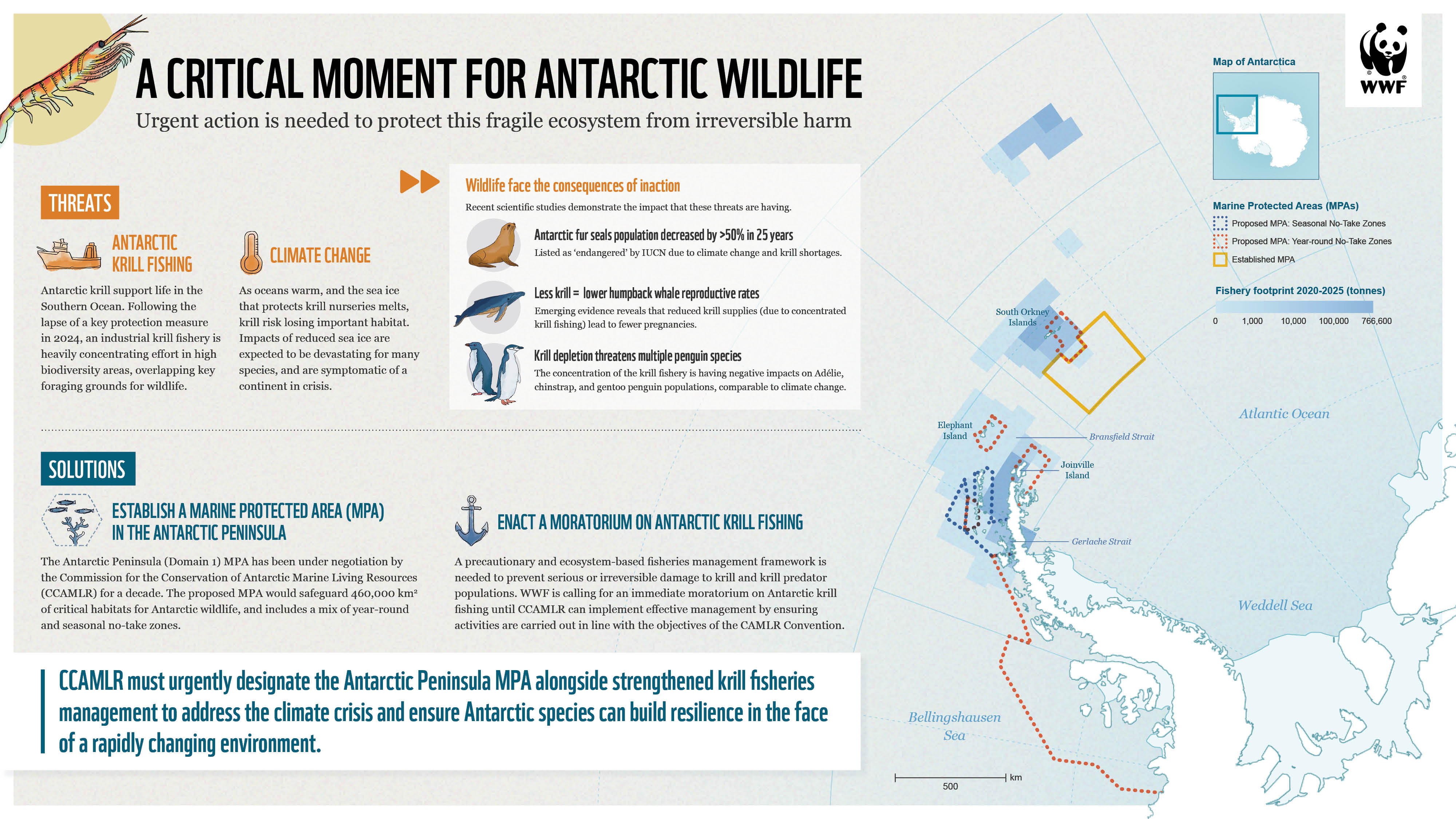
Governments from around the world will soon gather in Hobart (October 19-30) for the 45th annual meeting of the Commission for the Conservation of Antarctic Marine Living Resources (CCAMLR). The decisions made here could determine the future of one of the most extraordinary places left on Earth: Antarctica. The meeting is a critical opportunity to designate the Antarctic Peninsula (Domain 1) Marine Protected Area (MPA) and address the growing impacts of Antarctic krill fishing on wildlife.
The Antarctic Peninsula is changing before our eyes. It is one of the fastest-warming regions on the planet, with climate change disrupting the delicate balance that life in the Southern Ocean depends on. Sea-ice is disappearing, ecosystems are shifting, and the wildlife that makes Antarctica so remarkable is under increasing pressure.
But climate change is only part of the story.
The Antarctic Peninsula is also the centre of an industrial krill fishery. Krill may be small, but they are the lifeblood of the Southern Ocean. These tiny crustaceans feed whales, penguins, seabirds and countless other species. Yet, fishing vessels are increasingly targeting the same feeding grounds that wildlife depends on to survive. Evidence of negative impacts on penguins, seals and whales continues to emerge. With a key protection measure rolled back in 2024, the fishery is now under-regulated and operating without consideration of the broader ecosystem. Scientists have raised concerns that the combined pressures of climate change and concentrated krill fishing are reducing the resilience of this already vulnerable ecosystem.
The good news is that solutions are within reach.
CCAMLR can take a major step forward by designating the Antarctic Peninsula MPA, protecting critical habitats and helping wildlife adapt to a rapidly changing climate. WWF supports the immediate adoption of the MPA and stronger safeguards for vital whale and penguin feeding areas.
At the same time, governments must address the serious risks krill fishing poses. CCAMLR must adopt a highly precautionary, ecosystem-based krill fisheries management framework that protects wildlife and accounts for climate impacts, or enact a moratorium on krill fishing operations until such safeguards are in place.
Antarctica should not become another story of acting too late.
CCAMLR members have a rare opportunity to choose a different future: one where whales still gather in rich feeding grounds, penguins can find enough food to raise their chicks, and the Antarctic Peninsula remains a thriving sanctuary for generations to come. The world is watching, and Antarctica cannot wait.