
Devoted mums
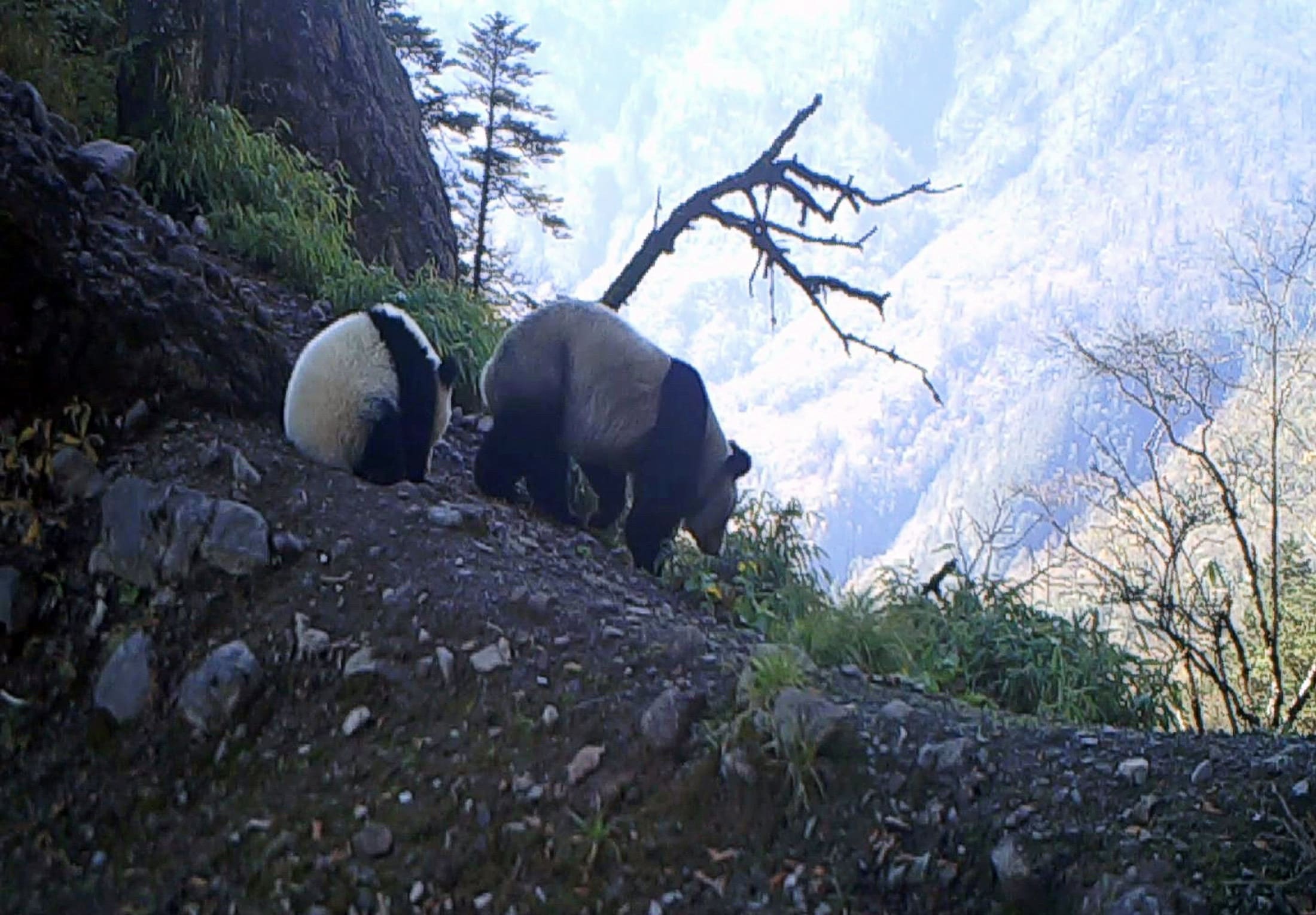
Few animals are as needy as a newborn giant panda – and looking after this rare little creature is a big ask for the mother. As with many species, the father is inevitably no longer in the picture – having mated, he swiftly departs, leaving the female to raise their offspring alone.
In fact, the chances are that he’ll never encounter his cub, as these bears live in the remote mountain ranges of western China and live a largely solitary existence.
Far from giant
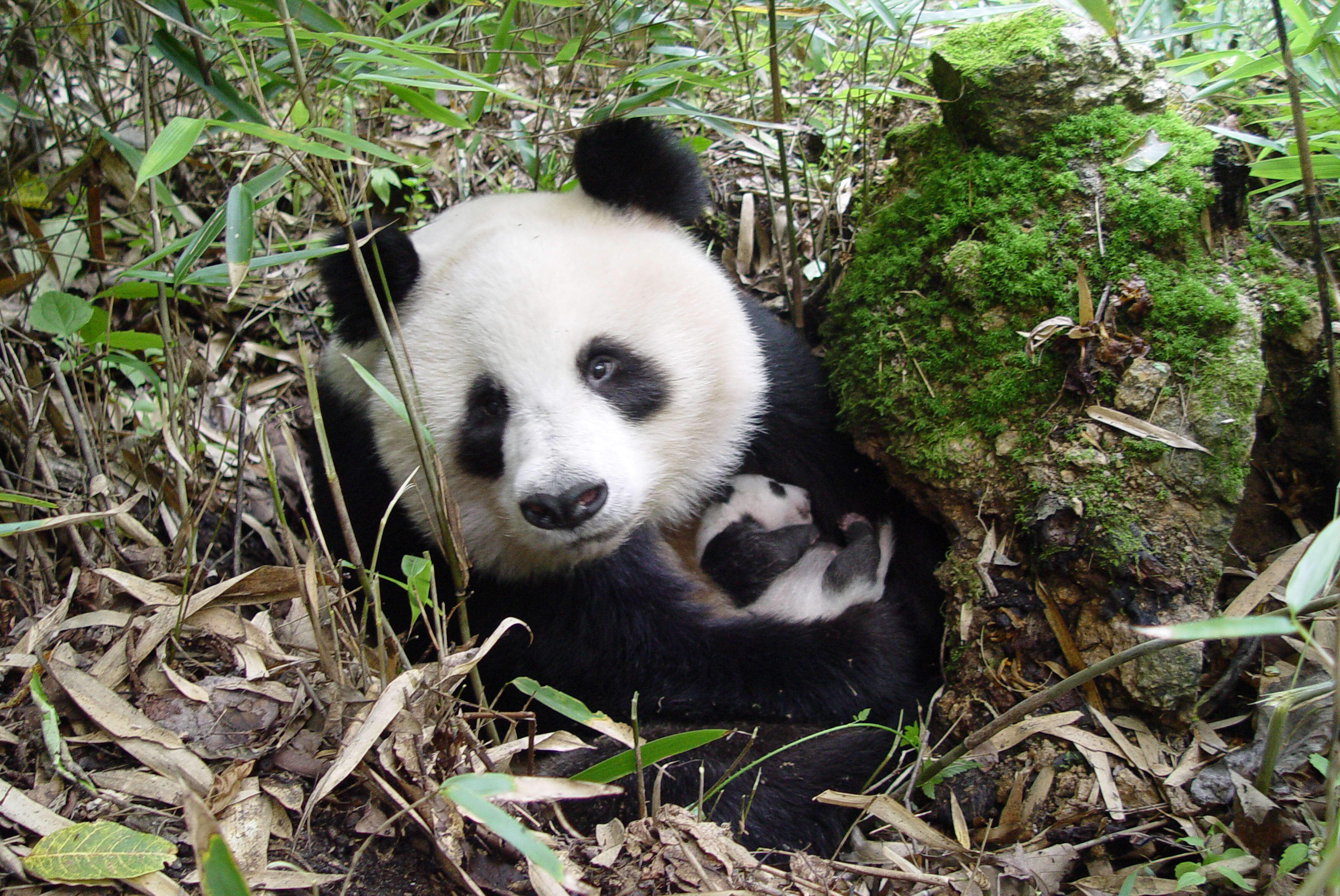
A newborn panda weighs just 85-140g – not much more than 0.1% of the size of its mother – and is proportionally smaller than any other newborn mammals, except marsupials.
The only other mammals with similarly tiny newborns are marsupials such as kangaroos and egg-laying mammals such as echidnas. Unlike those species, a giant panda doesn’t have a pouch to shelter her newborn.
Tiny and helpless
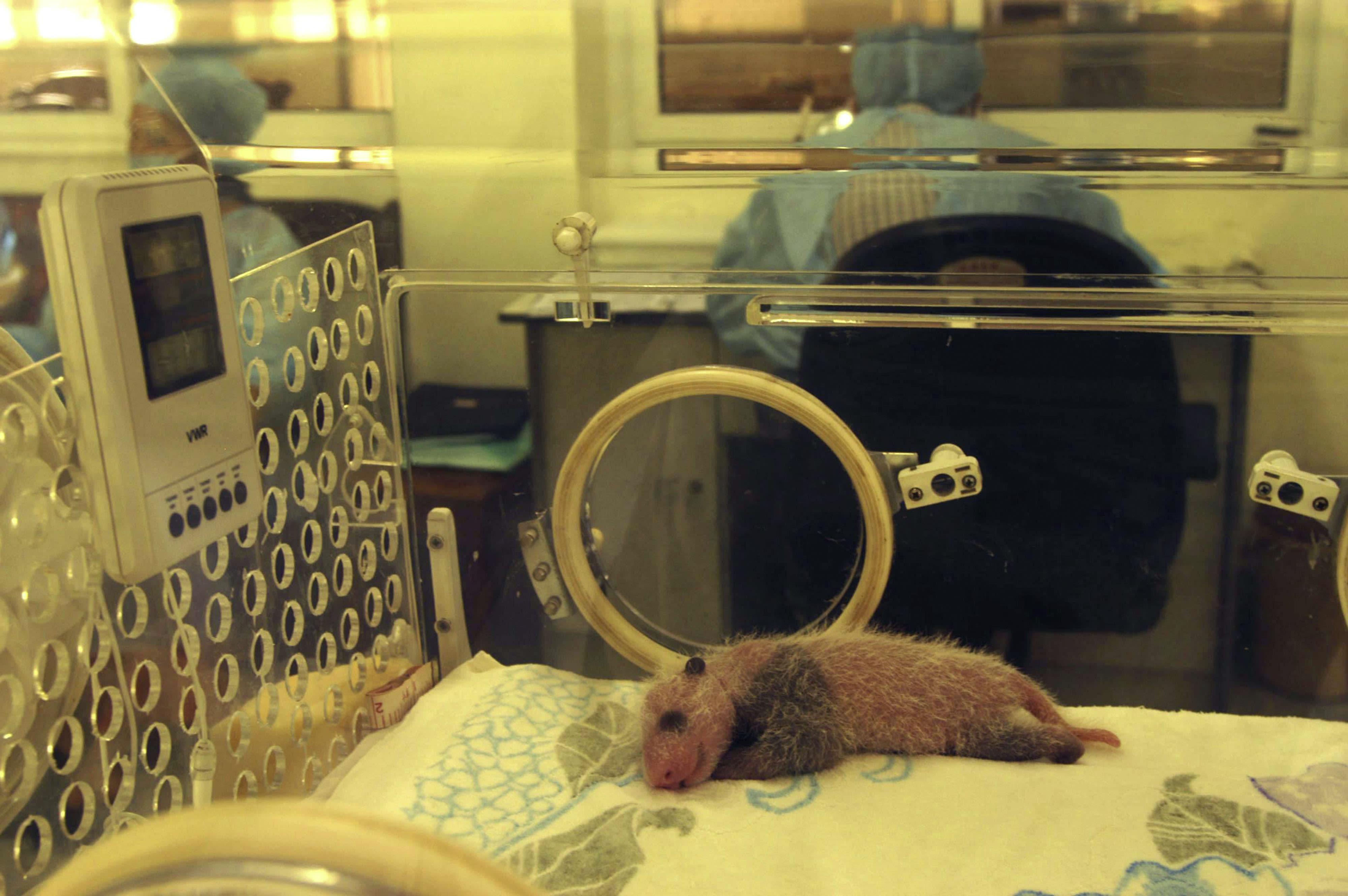
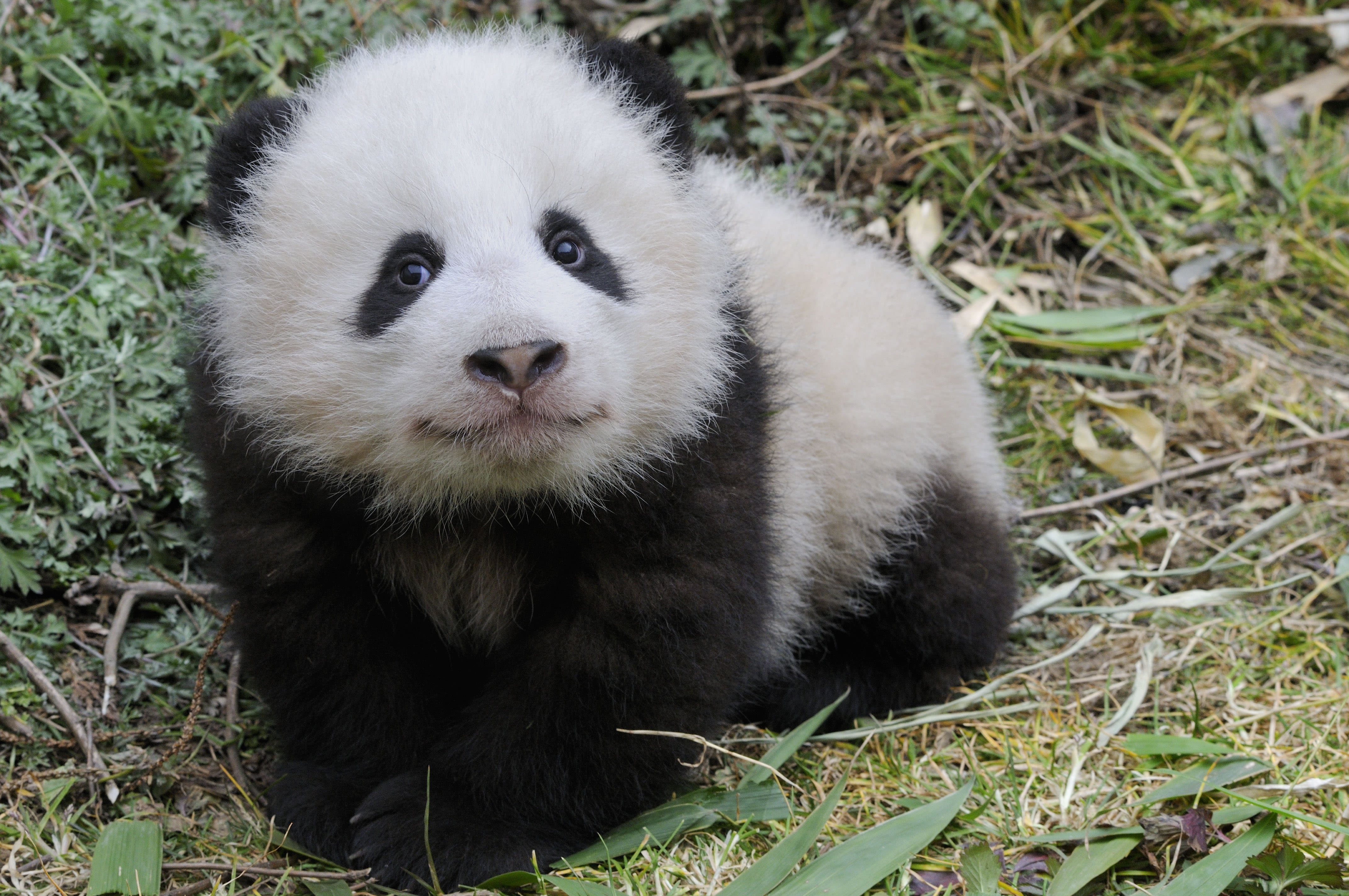
Pandas are also born without their distinctive black-and-white markings (above), but the colouration appears within the first three weeks of life.
The cub isn’t just tiny but also blind and almost hairless. Keeping the minuscule newborn tucked into her foreleg, beneath her chin or cradled in her body, the new mother also breathes on it to keep it warm.
Indeed, she needs to do almost everything for her helpless offspring, at first using only her mouth rather than her less-sensitive paws to move it.
Branching out
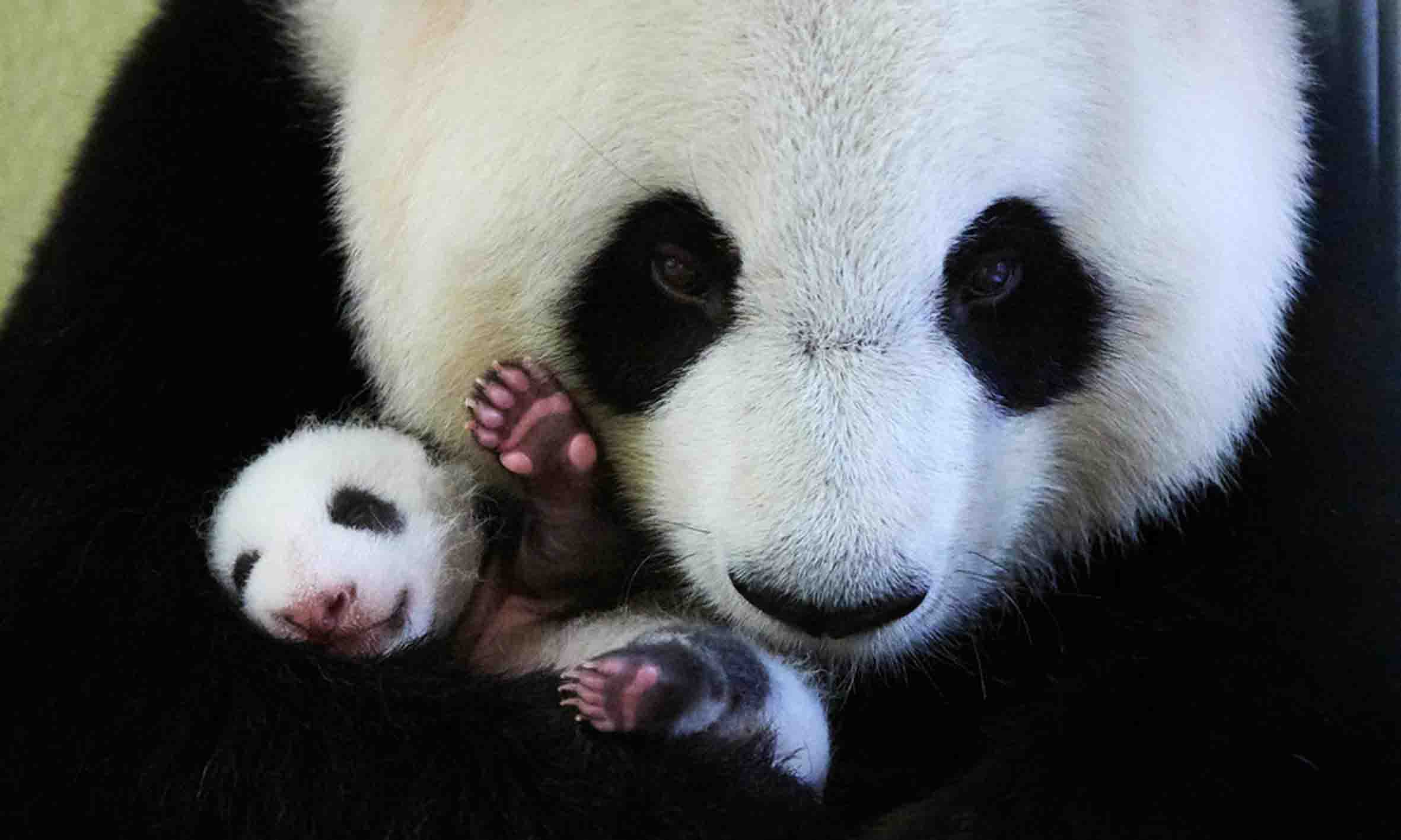
Things pick up quickly, though. By the time it’s three months old a cub’s eyes are fully open, and around two months later it can begin to walk and climb.
A couple of months later, it will start to nibble on solid food – bamboo – but cubs aren’t fully weaned until they’re between 18 and 24 months old. Mum is still on hand for a while after that, though: the young panda will stay with her for up to three years, learning about life, before striking out on its own.
Slowly but surely
Female pandas are fully mature and able to breed from the age of about four or five and normally give birth to one cub every two or three years. One female can have five to 10 litters in her lifetime. She needs to give each one the best chance of survival, devoting herself to their well-being for several years.
Yet despite this care and attention, not all newborns survive in the wild. This low survival rate and a slow reproduction rate are some of the reasons why panda populations are taking a while to recover – and why your support is so important in safeguarding the future of each individual panda in the wild.