Skip to content
Aptenodytes forsteri Emperor penguin Group of adults with chick Dawson-Lambton Glacier, Antarctica
Emperor penguin adults with chick © Fritz Pölking / WWF
On thin ice

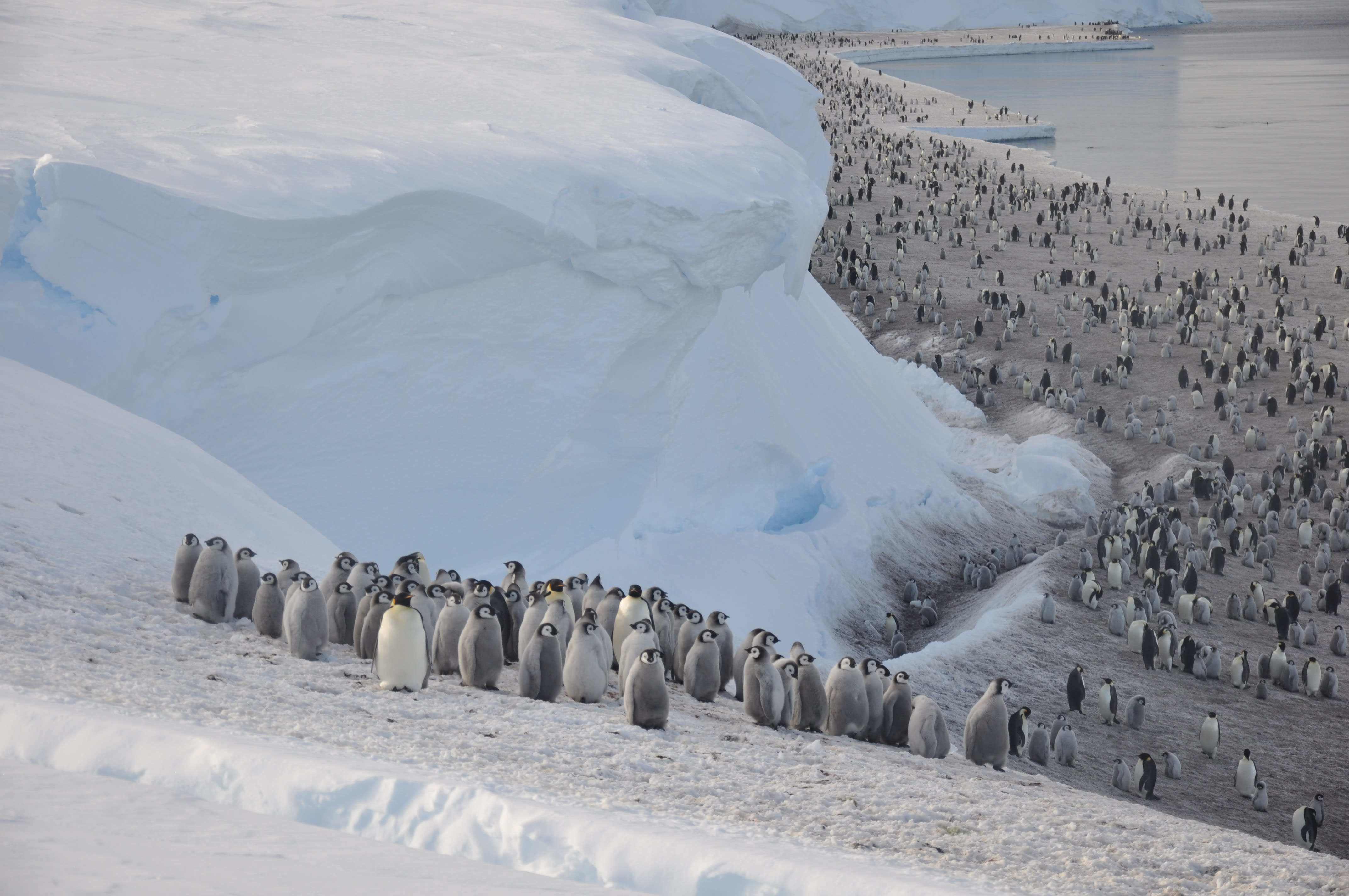
Emperor penguins have a remarkable breeding strategy. Unlike other penguin species, they raise their chicks on a floating platform of sea ice connected to the shore, known as fast ice. It’s a precarious way of life, and recent climate conditions have made it even more challenging.  

Emperor penguins on the sea ice © Christopher Walton
Antarctica’s ice is shrinking at an alarming rate, and the consequences can sometimes be devastating. Every summer, the vast expanse of floating ice breaks up, marking the point at which penguin chicks venture into the open ocean and start a life of their own. But if the ice breaks up too early, the chicks are forced into the water before they’ve grown the waterproof feathers that protect them from the cold and help them swim.  

A year ago, we received the terrible news from the British Antarctic Survey (BAS) that a huge number of emperor penguin chicks had drowned when the ice broke up early. Fortunately, the sea ice has been more stable this year, with fewer break-ups and fewer penguins suffering as a result – but it continues a worrying trend of whole colonies failing to successfully raise their chicks to independence.  

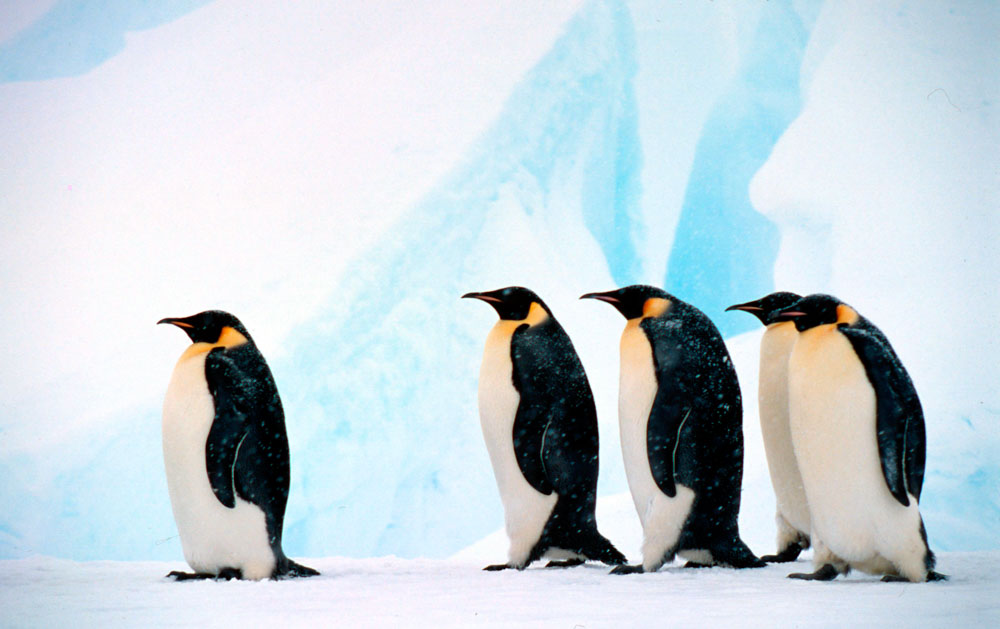
Aptenodytes forsteri Emperor penguin Group against background of blue ice Dawson-Lambton Glacier= Antarctica
© Fritz Pölking / WWF

Amid these challenges is a glimmer of hope: some of the colonies badly affected by last year’s early ice break-up have shown signs that they’re adapting by relocating to more stable areas, including icebergs and ice shelves (extensions of thick land ice). “The fact that we’re seeing the worst-affected colonies start to adapt gives us hope that emperors can react to their changing environment and move to find more stable ice,” says BAS scientist Peter Fretwell.  

Work is being done by BAS to scour satellite images to find and track emperor penguin populations. Recently, the search resulted in the discovery of four previously unrecorded breeding colonies, as well as the rediscovery of one believed to have vanished.  

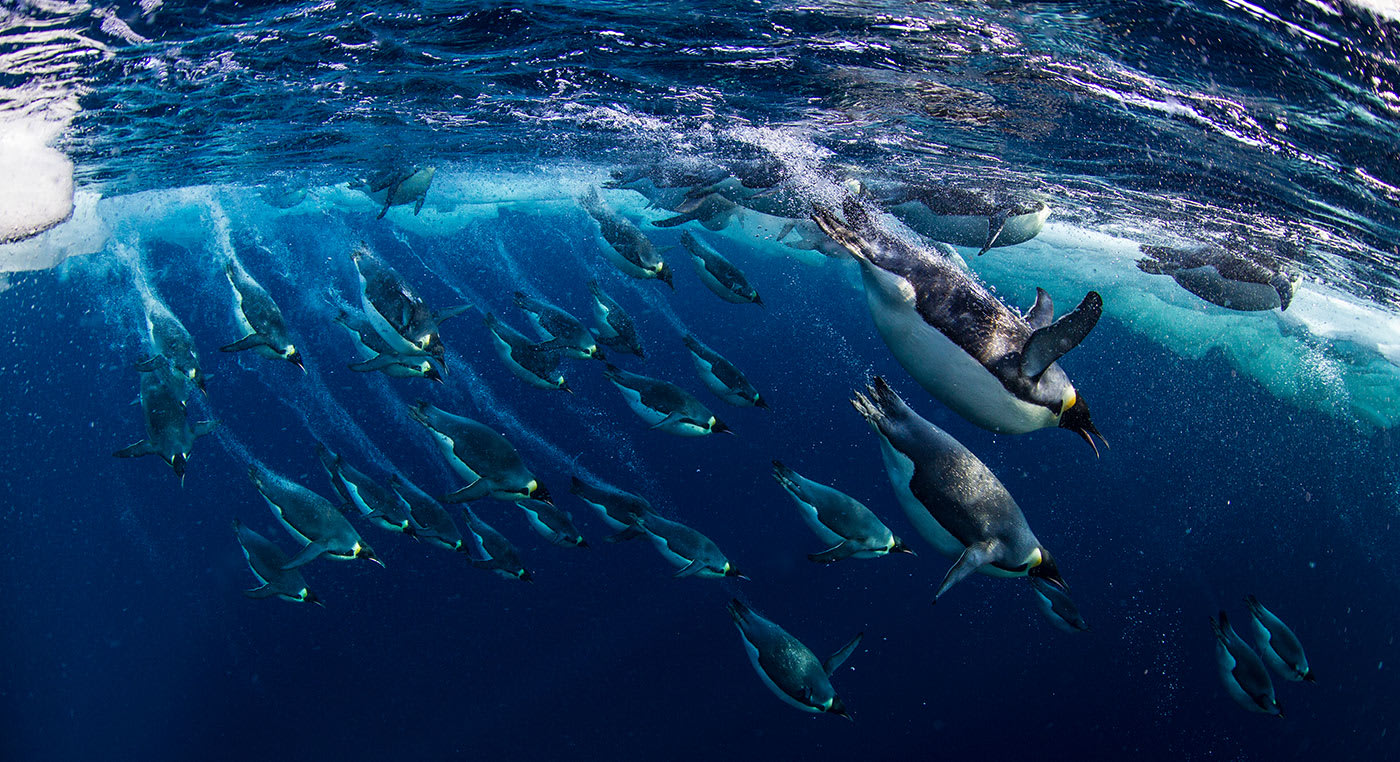
Emperor penguins (Aptenodytes forsteri) diving= Ross Sea= Antarctica
Emperor penguins (Aptenodytes forsteri) diving= Ross Sea= Antarctica © National Geographic Creative / Paul Nicklen / WWF

But despite some positive news, predictions for the emperor penguins’ future remain stark. If ice loss continues, where will these Antarctic icons go? Now it’s time to closely monitor how penguins are responding to their changing home and use these findings to push for global action on climate change to increase. 

Thank you once again for all your invaluable support.

Loading form…