People power on Dravuni Island
In Fiji, WWF is working with local communities to rethink their relationship with turtles – and they’re already seeing results!
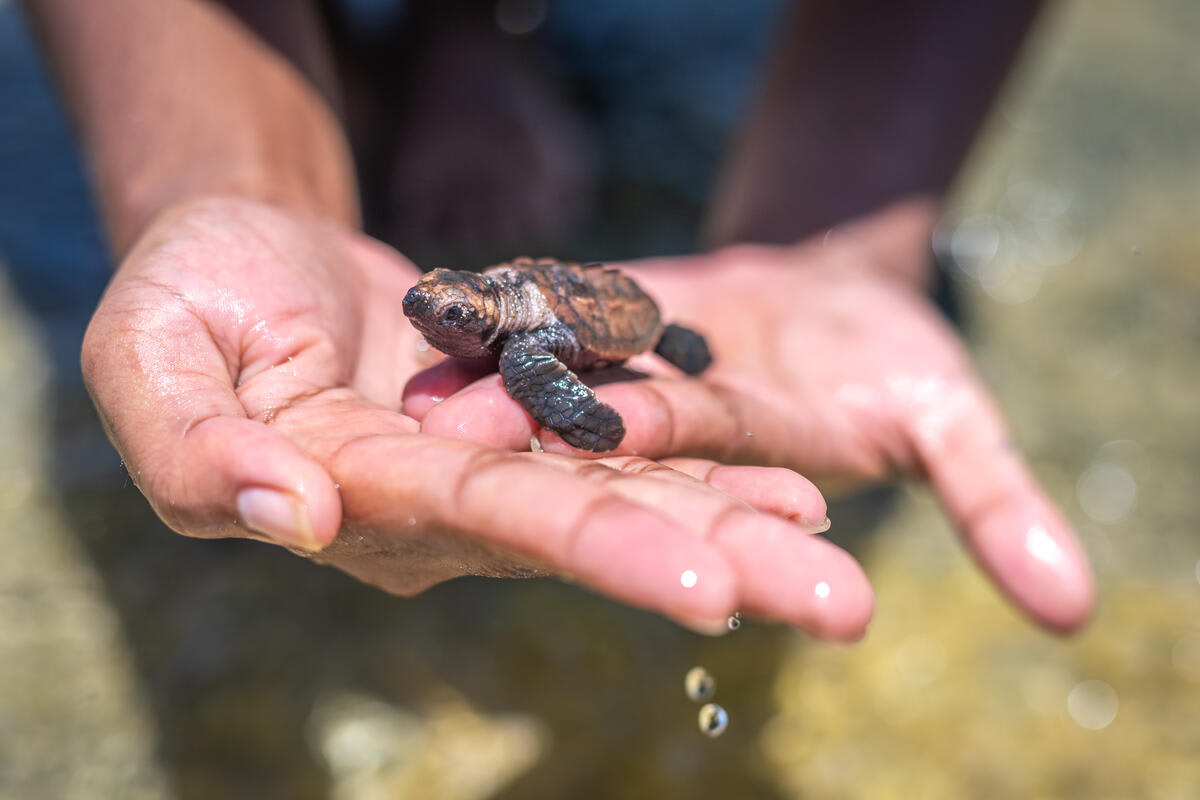
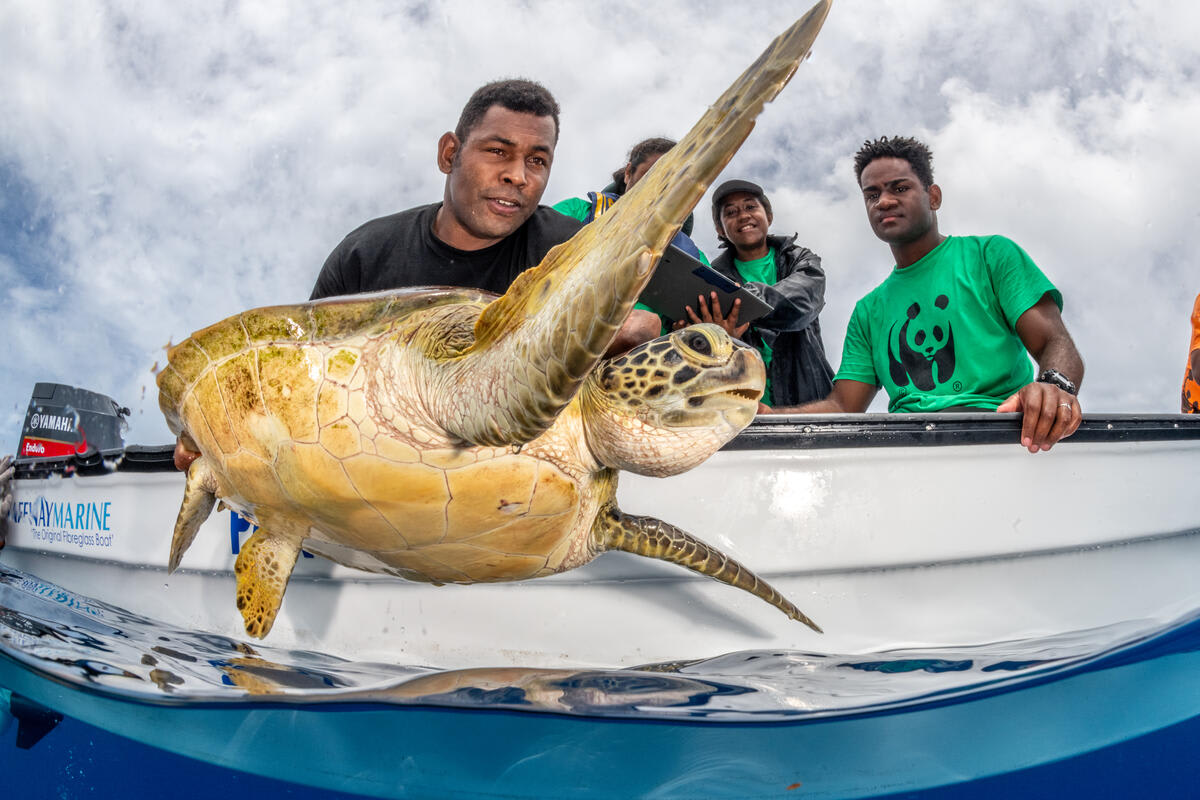
Turtle monitors on Dravuni Island are helping to protect vulnerable turtles and their nests from poachers, giving turtles a better chance at survival for future generations.
Raising Awareness
Hunting and consuming turtles and their eggs is deeply intertwined with the cultural identity of Fiji’s coastal communities. The head of the village, Viliame, is no stranger to the practice. But a year ago, WWF began raising awareness of turtle conservation on Dravuni with the locals.
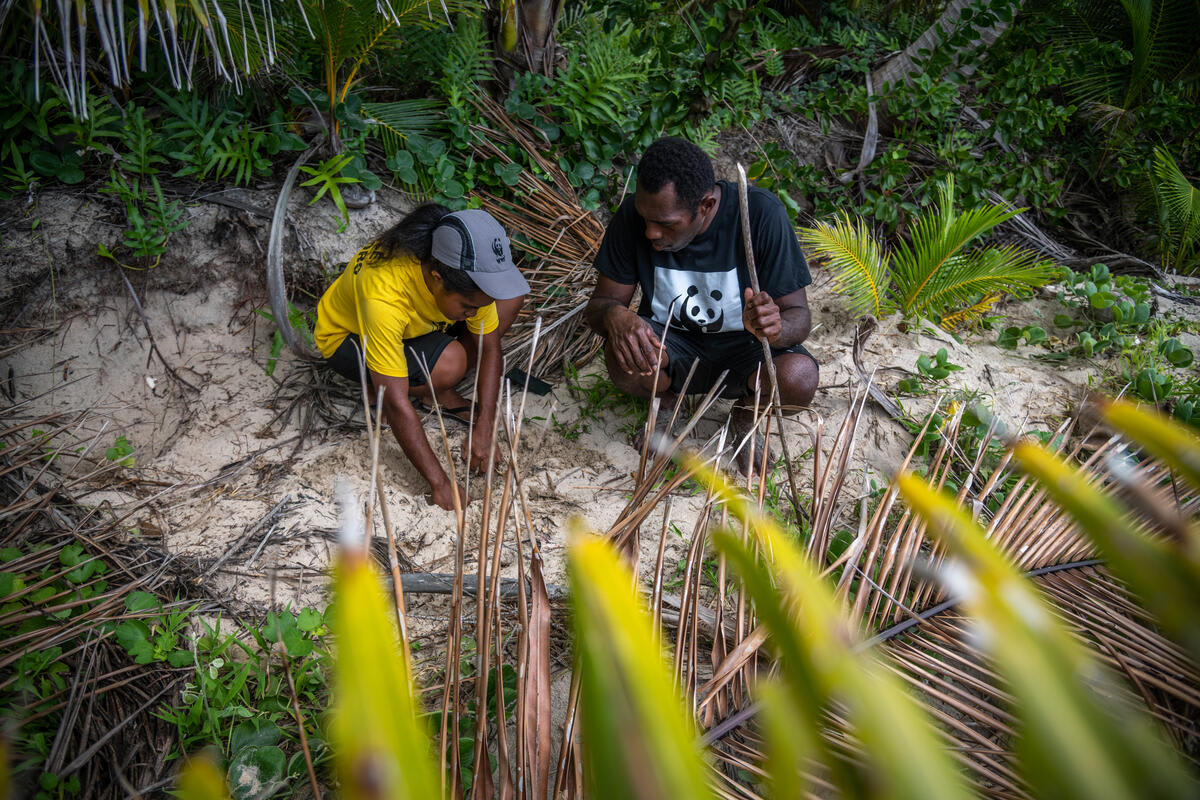
WWF invited members of the community to become turtle monitors, known as Dau ni Vonu. Today, Viliame is a turtle champion, transforming his previous hunting skills into a knack for finding nests. Now, many other villagers help out, reporting nests they’ve seen to Villiame.
Not only has the monitoring helped change the perspective of the communities towards the protection and survival of the species, but it also helps WWF conservationists keep a close eye on the breeding success of the turtles and further work on how best to protect them.
Changing attitudes
Just this year, on Dravuni and four uninhabited islands, 63 nests with eggs were recorded – 18 green and 45 hawksbill turtles. Only a year ago, most of the nests surveyed were empty and on the main island not a single egg was found.
Changing people’s attitudes towards turtles has made a big impact on the conservation of these beautiful marine creatures in Fiji. Educating about turtle biology, discussing the challenges turtles face and linking science with traditional knowledge are all important for changing how the community thinks about turtles.
It’s crucial we connect scientific insights with traditional knowledge, because without this, there’s no buy-in from communities.
Karalaini Rereavosa - Assistant Turtle Project Officer, WWF-Pacific's Fiji Office.
Thank you
This form could not be loaded. Please check the configured form URL.