Skip to content
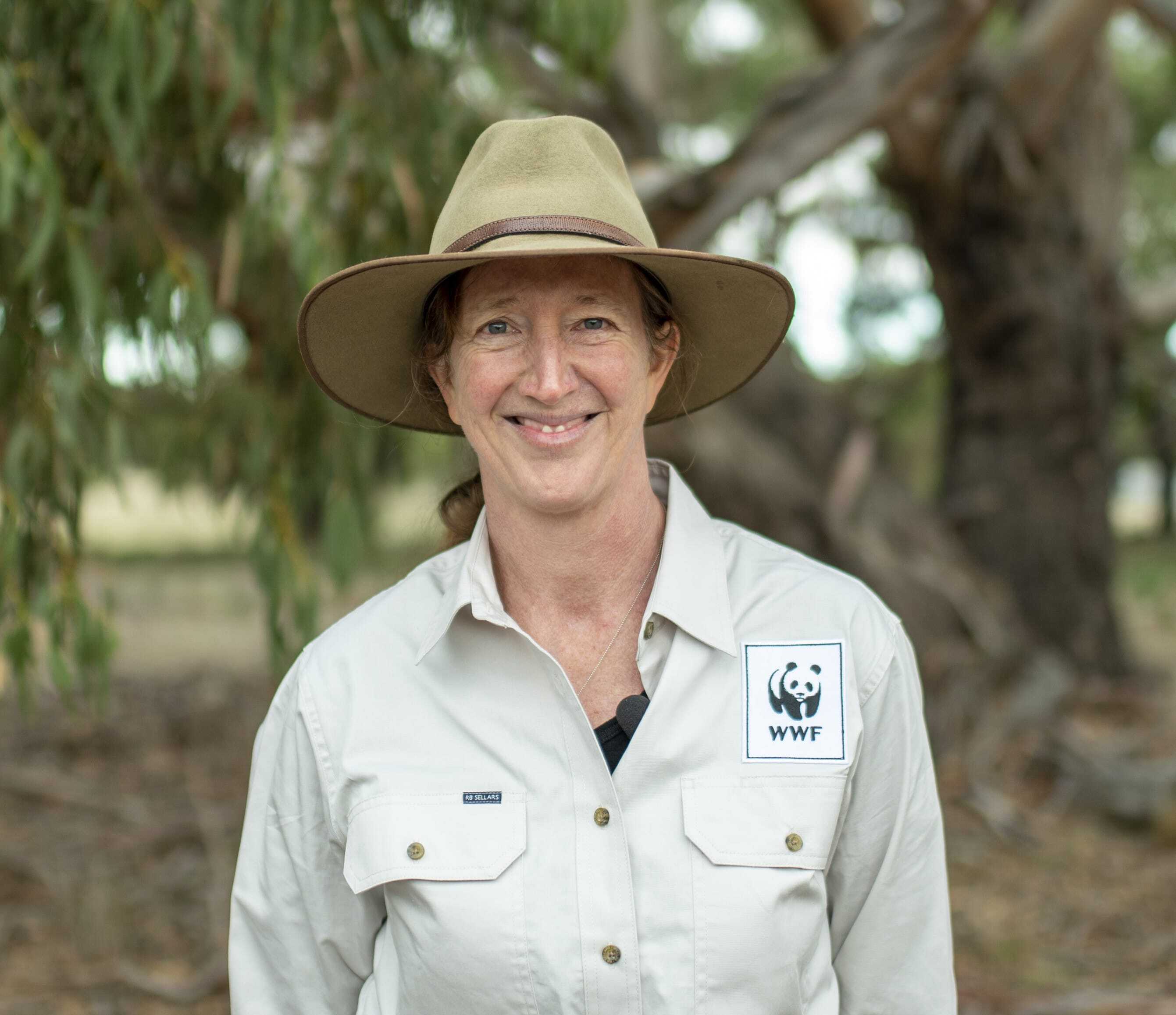
Tanya Pritchard, Landscape Restoration Project Manager, WWF-Australia.
Koala Friendly Carbon, a first-of-its-kind carbon program to help restore koala habitat, is now available in the Northern Rivers Region of New South Wales.
The pilot program – which aims to boost koala numbers – is a partnership between the World Wide Fund for Nature-Australia, the NSW Government and Climate Friendly.
© Climate Friendly

Koala Friendly Carbon Initiative: Restoring Nature, Supporting Landholders

In a groundbreaking effort to protect one of Australia’s most beloved species, the Koala Friendly Carbon Initiative is empowering local landholders to restore vital habitat for endangered east coast koalas.

This first-of-its-kind carbon farming program is setting a bold vision for the future - to regenerate 10,000 hectares of rich koala habitat across eastern Australia over the next decade, making it the nation’s most visionary carbon removal project.

The Koala Friendly Carbon Initiative is restoring habitat in key regions across New South Wales with plans to expand across eastern Australia, wherever koalas and communities can thrive together.

The Koala Friendly Carbon Initiative facilitates landholders in restoring native forests and earning income through Australian Carbon Credit Units (ACCUs), providing full support from seedling supply to biodiversity monitoring.

These plantings create vital habitat for koalas, boost biodiversity, improve soil and water health, and strengthen local economies.

Central to this work is respect for First Nations Knowledge and connection to Country. WWF partners with Indigenous communities and contractors, ensuring Traditional Knowledge and community priorities guide every step where consultation and collaboration is appropriate.

This is nature-positive climate action at its best, because protecting koalas means protecting Country, culture and the ecosystems we all depend on.

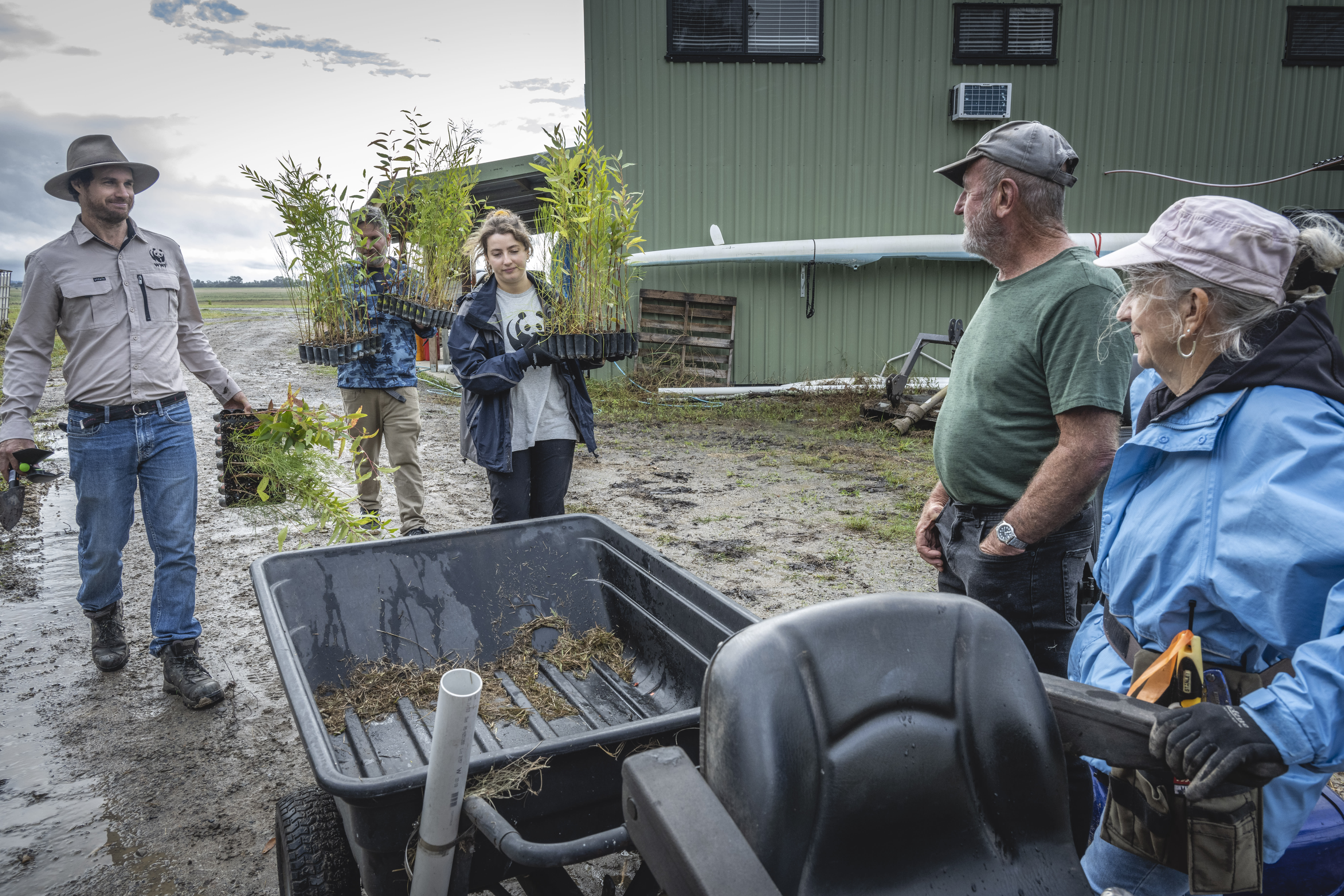
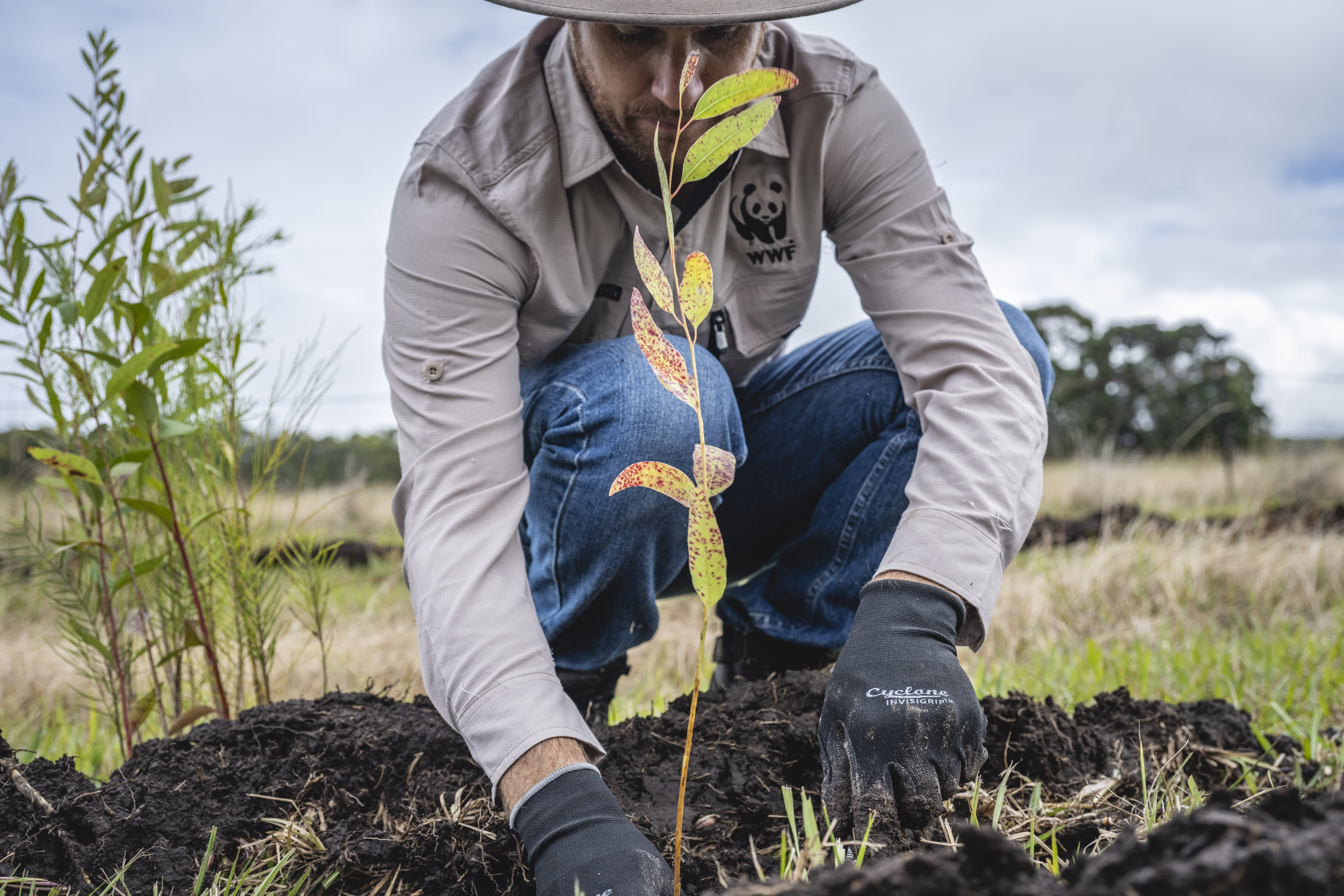
Swan Bay, New South Wales, Australia. Young trees out of the nursery are being loaded on the back of Lyn Thomson and Steve Posselt’s trailer by Ben Herrington and Sophie Hueppauff from WWF-Australia, as well as Dave Bisson from GreenBuzz Agency. Once planted, these young trees will then become a viable habitat for many wildlife species, including koalas.
Tree planting Swan Bay, NSW. © WWF-US / Franck Gazzola
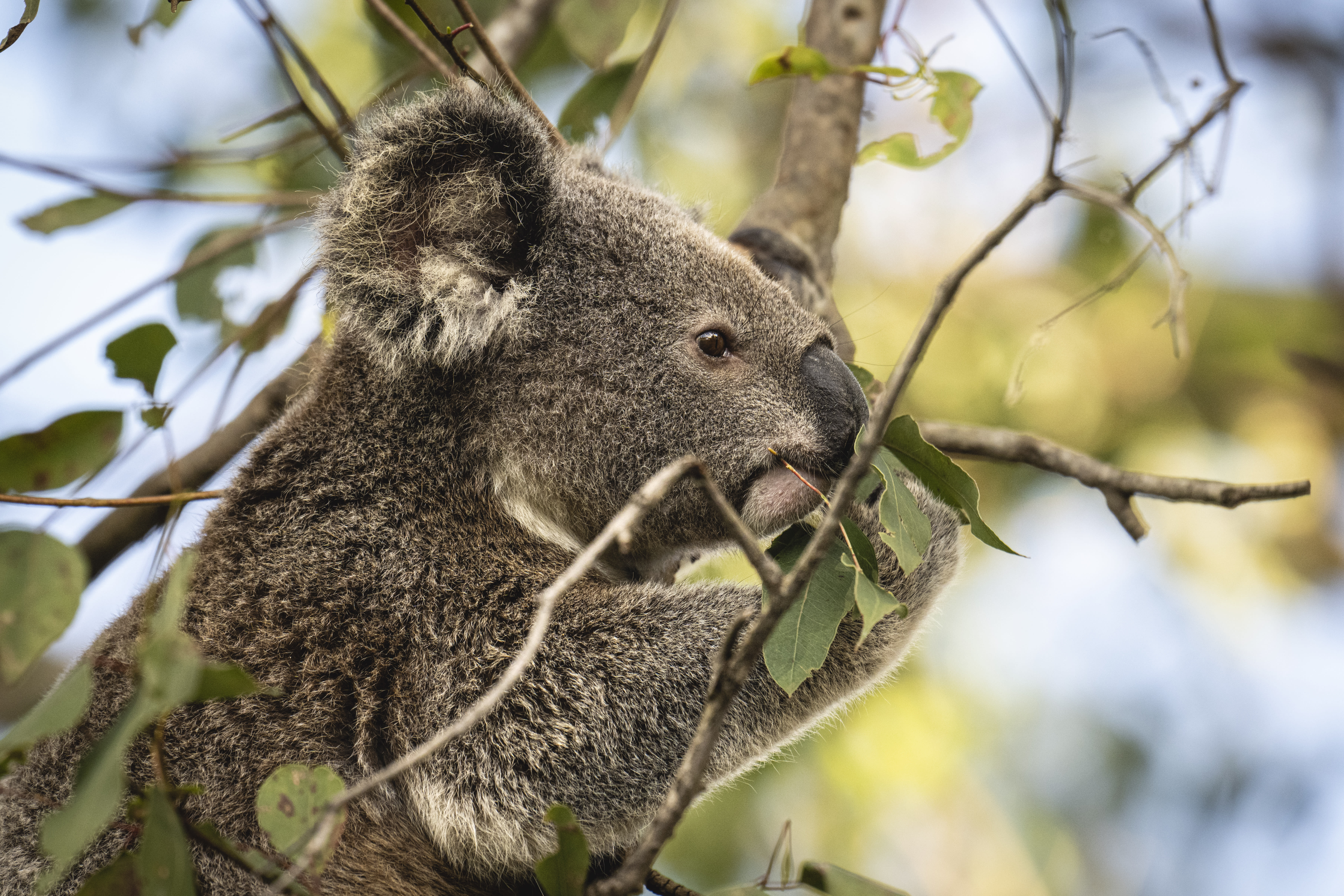
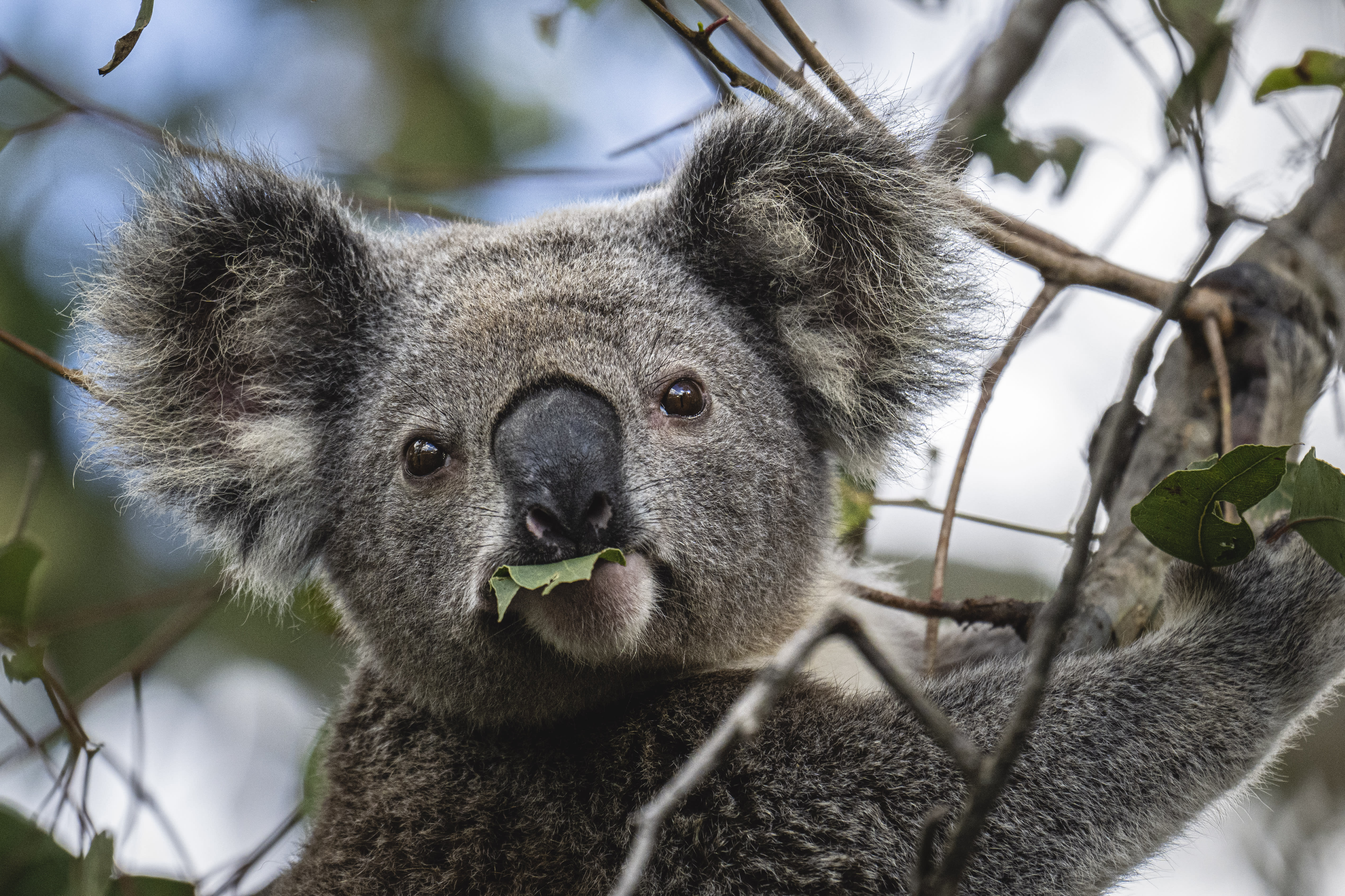
Lismore, New South Wales, Australia. In the mature Eucalypt trees near Lismore, some koalas are very active at sunset, feeding on leaves. Under threat, their main challenge is to find enough suitable habitat as deforestation has led to a shrinkage of the available territory for these animals, making WWF-Australia’s initiative of creating koala friendly forests with landowners more relevant than ever.
Koala feeding on leaves in Lismore, New South Wales, Australia. © WWF-AU / Franck Gazzola
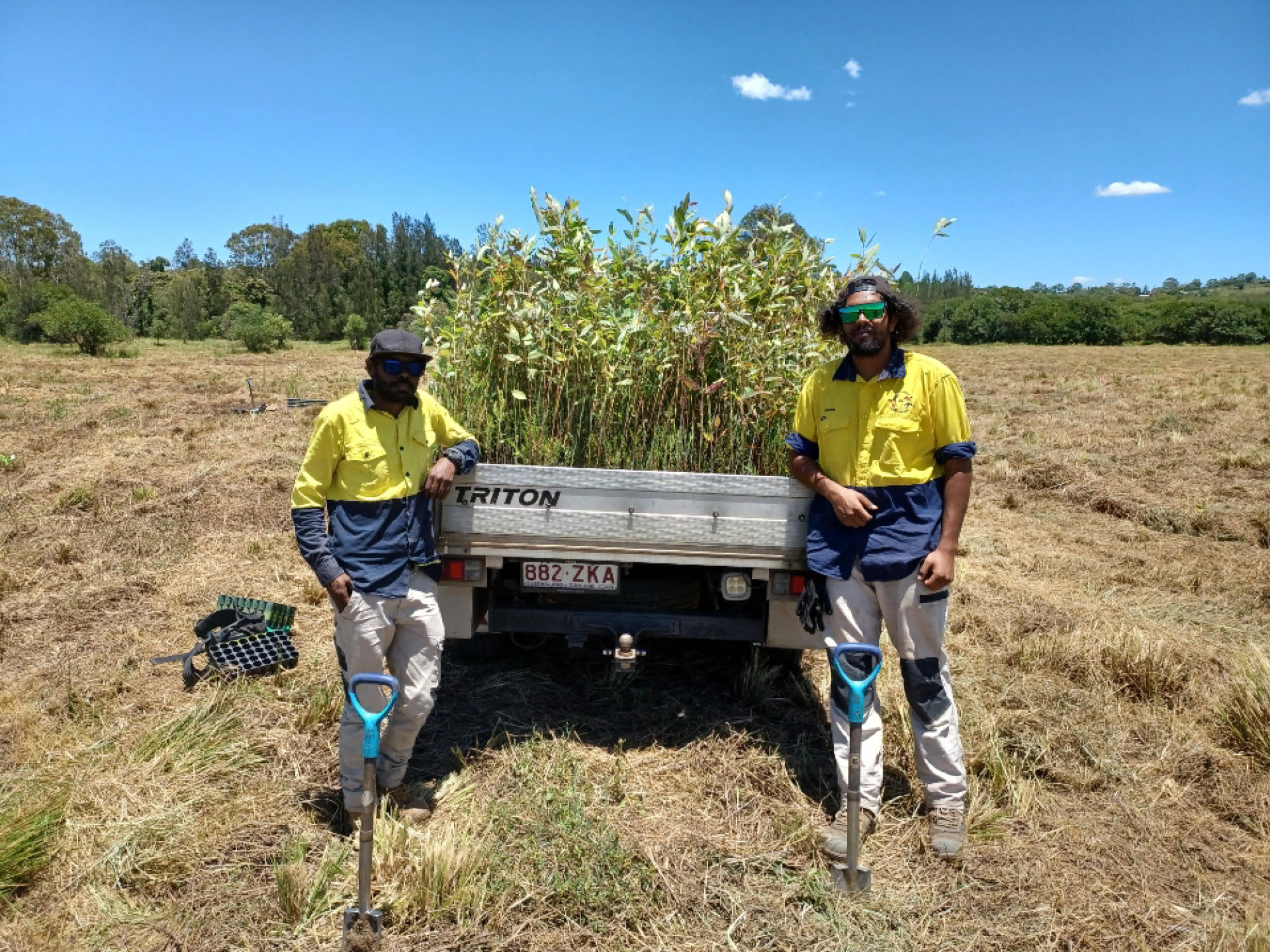
2 people stand in front of a ute filled with young trees on an agricultural property. There are 2 shovels dug into the ground in front of them and dry grassland and trees behind them. Minyumai Rangers assisting with planting trees
Minyumai Rangers assisting with tree planting. © WWF-Australia
Our Impact

The Koala Friendly Carbon Initiative is on a mission to restore 10,000 hectares of koala habitat across eastern Australia. Here’s how we’re turning vision into action:

10 projects registered

More than 250,000 trees planted

Over 750 hectares of koala habitat being restored

That’s more than 1,000 football fields!

Working to grow a koala population of up to 13,000

(Stats from June 2025)

How to get involved

Landholders - Do you have more than 20ha of land that you would like to commit to koala habitat restoration and earn an income while doing so?

First Nations Organisation- Are you a ranger group caring for Koala Country? We’d love to explore how we can collaborate on this project and support your work on Country like our partnership with Minyumai Rangers.

Carbon Credit Buyers - Are you interested in buying the highest quality Environmental Planting ACCUs available on the market?

Investors - Interested in supporting the growth and scaling of the Koala Friendly Carbon Initiative?

Get in touch with Tanya Pritchard from the WWF team for a chat on 0424 061129.

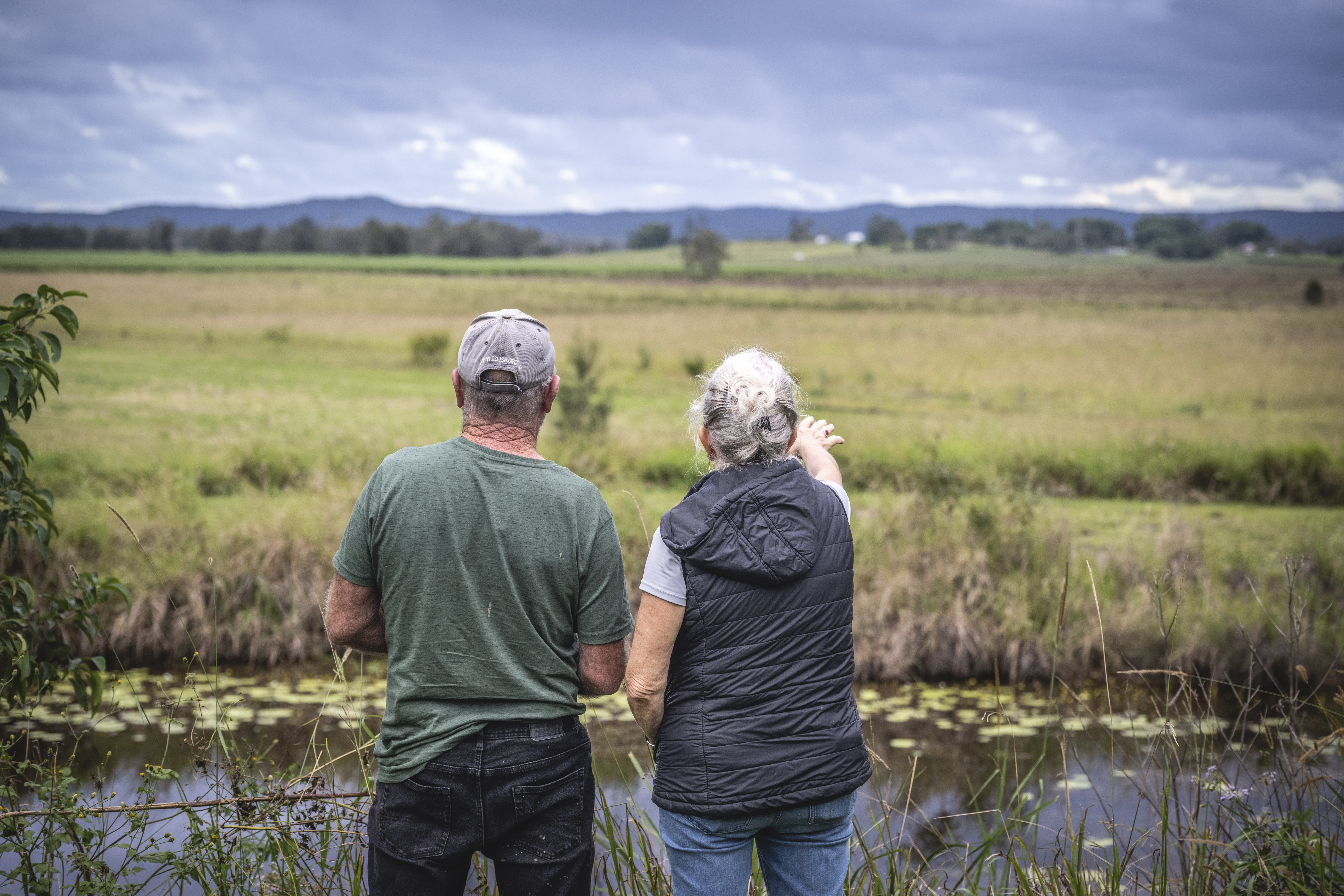
Couple Lyn Thomson and Steve Posselt have their backs to the camera as they look out over the fields and trees of their property. In front of them is a pond with lilypads, and dark rain clouds loom overhead in the background.
Landholders Lyn Thomson and Steve Posselt look over their land in Swan Bay, NSW © WWF-Australia / Franck Gazzola

Meet the landholders restoring koala habitat

These case studies highlight how conservation and farming can go hand in hand, restoring koala habitat, improving biodiversity, and generating carbon income. Explore how local landholders are making a lasting impact for nature and community.
Read More

Frequently Asked Questions

What is a carbon credit?

A carbon credit represents one tonne of greenhouse gas emissions avoided or removed from the atmosphere. Companies buy them to offset emissions by supporting projects like reforestation or renewable energy.

How are they generated?

Credits come from verified projects that reduce, avoid, or remove emissions, such as clean energy, forest restoration, or methane capture programs.

Are all carbon credits equal?

No. Their quality depends on factors like measurable impact, location, community and biodiversity benefits, project scale, and cost. WWF supports high-integrity carbon markets that benefit climate, nature and communities. While some credits have been misused, WWF believes in improving standards, not abandoning the system.

How are Koala Friendly carbon credits different?

Unlike standard offsets, these credits are generated through environmental plantings that restore native forests and create critical habitat for endangered koalas and other wildlife. Each credit reflects a commitment to nature-positive climate action, science-led biodiversity monitoring, and collaboration with First Nations communities.

Backed by rigorous standards and deep ecological impact, Koala Friendly Carbon Initiative credits are among the highest quality Environmental Planting ACCUs in Australia and form a key part of WWF-Australia’s bold mission to Regenerate Nature by 2030.

Should carbon credits replace direct emissions cuts?

WWF follows a simple approach to cutting carbon: first avoid emissions, then reduce them as much as possible, and only use carbon credits to offset what’s left over. This includes indirect emissions like those from suppliers and travel (known as Scope 3).

How does WWF ensure the carbon offsets from this project are effective?

In Australia, the Clean Energy Regulator oversees the integrity of the Carbon Credit Unit scheme. WWF also supports independent verification of co-benefits, like its Koala Friendly Carbon Initiative, which is audited by Accounting for Nature. Projects must meet four key criteria:
• Additionality – emissions reductions wouldn’t happen without the project.
• Measurability – robust, independently verified data.
• No leakage – emissions aren’t displaced elsewhere.
• Permanence – carbon is stored long-term (ideally 100 years).

How does WWF work with First Nations peoples on this project?

WWF works closely with local Aboriginal Land Corporations and Indigenous groups when developing new projects or expanding into new regions, ensuring Traditional Knowledge, connection to Country, and community priorities are respected and embedded throughout the process.

WWF is dedicated to strengthening and expanding our decades long meaningful collaboration with First Nations communities across the regions where we operate. We are committed to engaging local Indigenous contractors to collaborate with us on activities such as site preparation, planting, maintenance and monitoring for Koala Friendly Carbon Initiative projects.

How does WWF assess the impact for koalas?

WWF uses the Accounting for Nature framework to track the health of nature at its project sites. Before planting begins, we measure the condition of the land and local koala populations. Then, we check in again at years two, five and ten to see how things are improving.

Independent scientists at Accounting for Nature assess the results, so you can trust that the data is backed by credible, science-based evaluations.

The Koala Friendly Carbon Initiative is a collaboration between WWF-Australia and Climate Friendly, proudly supported by the NSW Government and HP Inc.

Loading form…